

Rosado
Rosado, often known as Rosé in English, is a type of wine varietal that includes red-wine grape skins in its production, but not enough to qualify it as a full-fledged red wine. The result is a pinkish color, which can range from a pale, delicate blush to a vivid, near-red hue.
Rosado wines are usually characterized by their fresh, fruity flavors, and in terms of profile, they often hold a balance between the lightness of white wines and the heavier body of red wines. Common tasting notes may include strawberries, cherries, and raspberries, as well as floral, citrus, or melon undertones. Rosados can be made from a variety of grapes, including Pinot Noir, Grenache, Syrah, and Sangiovese.
The production method for Rosado wine can differ, but two conventional methods are skin contact (where red grape skins are allowed to ferment with the juice for a short time) and saignée or “bleeding” (where some juice is removed from red-wine must).
Rosado wines are primarily known for their versatility. They can be served chilled and paired with a range of cuisines - making them a popular choice for spring and summer. However, they are now increasingly being recognized as wines that can be enjoyed year-round.
<div class="wikipedia-data"><p><b>Rosado</b> is the Spanish word for the color pink.
</p><p>Rosado may also refer to:
</p>
<ul><li>Rosado (wine), a type of wine in Spanish-speaking countries</li>
<li>Rosado (surname)</li>
<li>Governador Dix-Sept Rosado, a municipality in the state of Rio Grande do Norte in the Northeast region of Brazil</li></ul><div class="wikipedia-link">Wikipedia: <a href="https://en.wikipedia.org/wiki/Rosado">Rosado</a></div></div>
White Zinfandel
White Zinfandel is a pink rosé wine, made from the Zinfandel grape, which is red. Despite its name, it's not a white wine. It was originally created in California and is now a popular varietal all around the world. What distinguishes White Zinfandel from other rosé wines is its sugar content. This varietal tends to be on the sweeter side, with notes of red fruit, citrus, and melon, along with a slightly less tannic structure than red Zinfandel. It is low in calories and alcohol content as compared to other wines. It pairs well with a wide variety of foods including cheese and light appetizers. White Zinfandel is a great choice for a summer wine, being often served chilled.
<div class="wikipedia-data"><p><b>White Zinfandel</b> is a dry to sweet, pink-colored white wine which was invented by Sutter Home Family Vineyards winemaker Bob Trinchero in 1948. Originally the result of a stuck fermentation and fortuitous accident, White Zinfandel is made from the Zinfandel wine grape, which would otherwise produce a bold and spicy red wine. As of 2018, Sutter Home White Zinfandel is the no. 1 White Zinfandel, with 29.1 percent dollar share of the $300 million White Zinfandel market and 73.1 percent of the 187 mL White Zinfandel market.</p><div class="wikipedia-link">Wikipedia: <a href="https://en.wikipedia.org/wiki/White Zinfandel">White Zinfandel</a></div></div>
Médoc
Médoc is a renowned wine-growing region in France, located to the north of Bordeaux along the Gironde Estuary. It is famous for producing some of the world's most prestigious red wines. The region is divided into three main areas: Bas-Médoc, Haut-Médoc, and Médoc.
Notably, the Haut-Médoc houses many of the most well-known wine chateaux, including those in the communes of Saint-Estèphe, Pauillac, Saint-Julien, and Margaux. These high-quality wines are usually a blend of Merlot, Cabernet Sauvignon, and Cabernet Franc.
The geography of Médoc features gravelly soil, which is excellent for vine growing as it provides good drainage and reflects heat to help grapes ripen. The climate is maritime, with hot summers and mild winters.
Apart from being a wine-lover's paradise, Médoc is also known for its scenic beauty, with picturesque châteaux, vast vineyards, and pine woods. There is also a popular marathon held annually in Médoc, known as the Marathon du Médoc, which involves runners drinking wine at refreshment stands along the route.
Ohio
The Ohio wine region is a diverse and burgeoning area known for its unique climate and soil conditions that contribute to the production of a wide variety of wines. Situated in the northeastern United States, Ohio's wine country benefits from the moderating effects of Lake Erie, which helps create a favorable microclimate for grape growing. This region is home to several American Viticultural Areas (AVAs), including the Grand River Valley, Lake Erie, and Isle St. George, each offering distinct characteristics and wine styles.
Ohio's wine industry has a rich history, dating back to the 19th century, and has seen a resurgence in recent decades. The region is known for producing both vinifera and hybrid grape varieties, with popular wines including Riesling, Chardonnay, Cabernet Franc, and ice wines. The state's wineries often focus on sustainable practices and local sourcing, contributing to the quality and uniqueness of their offerings.
Visitors to the Ohio wine region can enjoy scenic vineyard tours, tastings, and events that showcase the area's wine culture. The combination of picturesque landscapes, charming wineries, and a growing reputation for quality wines makes Ohio an intriguing destination for wine enthusiasts.
Elgin
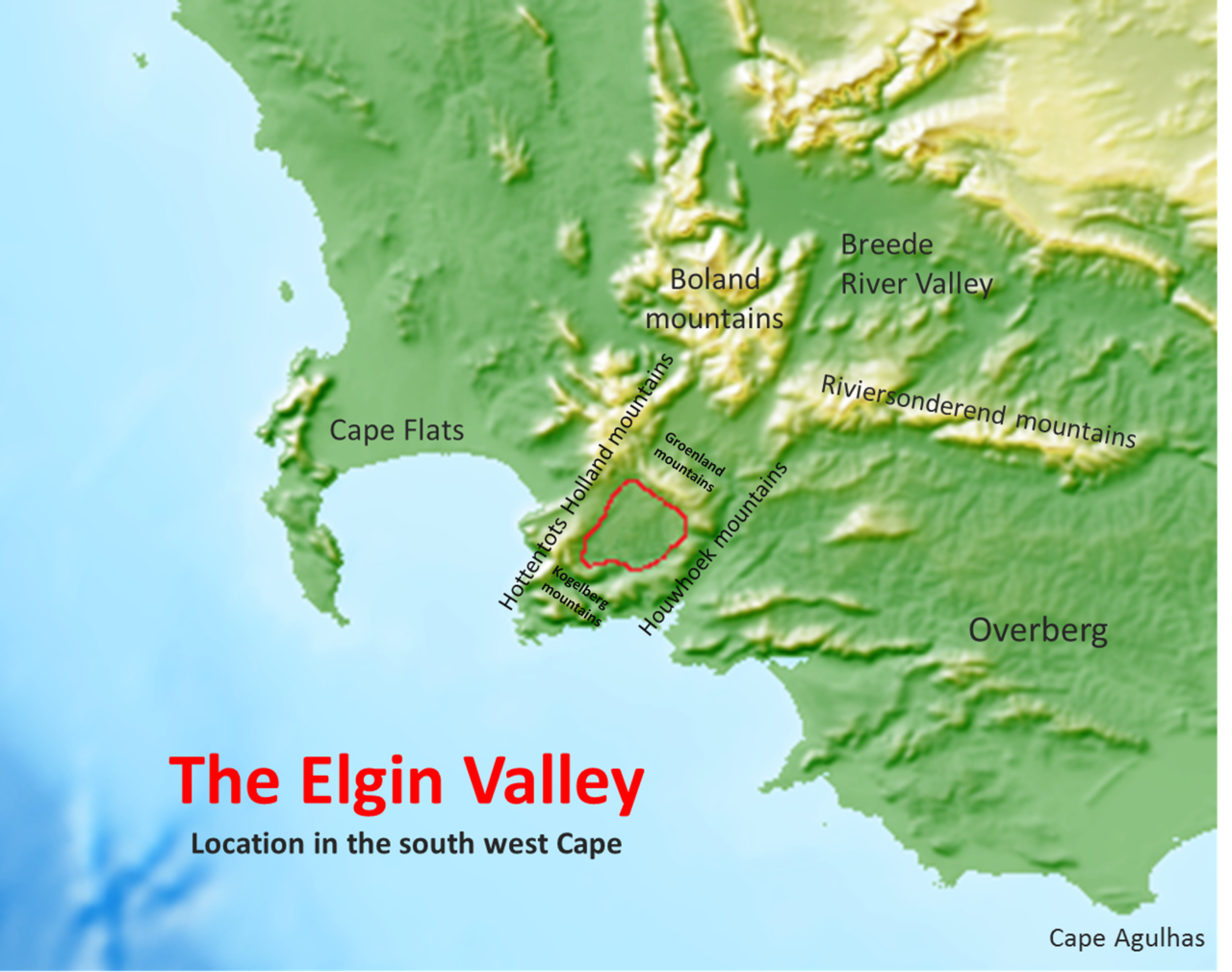
Elgin has more recently developed a large and thriving wine industry, and wines from the region have won several international awards. It is South Africa's coolest climate wine growing region. Other key geographic factors include its proximity to the Atlantic Ocean, the prevailing wind directions, and its altitude. The cool temperatures and plentiful winter rainfall mean that the Elgin basin has a set of conditions for wine growing which are markedly different to those in surrounding areas. Of the many varietals grown in the region, special attention has been paid to Sauvignon Blanc and Pinot Noir.
The region is historically significant for South Africa's wine history also because it had one of the earliest movements towards Black ownership of vineyards and wineries. The Elgin winery Thandi was in fact the country's second post-Apartheid winery with significant black involvement (after New Beginnings in Paarl).
Red Mountain
Red Mountain, also known as Red Mountain AVA, is a wine region in Washington State well-known for its production of Cabernet Sauvignon, Merlot and Syrah. The area is named after its reddish soil scheme, which is packed with minerals that contribute to its premium quality wines. More than 4,040 acres are planted with classic red grape varieties on the southwest-facing slopes that provide optimal sunlight for growing premium grapes.
Red Mountain is not only small in area but also one of the smallest AVAs in the state but despite its small size, Red Mountain’s influence on Washington wine is huge. The region has a temperature that is hot during the day but extremely cool in the evenings. The low precipitation in the region benefits vineyards by decreasing disease pressure on the vine grapes.
In addition to wineries, Red Mountain includes the cities of Kennewick, Pasco, and Richland, offering numerous recreational activities. The Red Mountain Trails are a popular hiking and biking spot, and the region's natural beauty draws visitors from around the world.
The region has a fascinating history dating back to the 1970s, when the first vineyard was planted. Today, Red Mountain has built a reputation for producing wines of amazing quality, concentration, and depth of flavor, with more than 50 vineyards and wineries.
The name "Red Mountain" is also often used to refer to the red sandalwood tree, which is native to parts of India, Nepal, and Pakistan. However, within the context of the U.S, it usually refers to the famed wine region.
Bot River
Bot River is a small town situated in the Western Cape Province of South Africa. It is located in the Overberg region at the bottom of the Houw Hoek Mountains. The valley, named after the Bot River, is known for its beautiful landscapes, including vineyards, hills and indigenous fynbos.
The town has a rich cultural history with evidence of Khoi, San, Dutch and British occupation. This area is primarily an agricultural community, renowned for its excellent quality wine farms. The Bot River wine region spans from the southern slopes of the Hottentots Holland mountain range to the coastline of Walker Bay.
The region is home to several farms just an hour and a half away from Cape Town, offering a variety of outdoor activities, excellent restaurants and unique accommodation options. It's also home to rare and endangered species like the Western Cape leopard toad and blue crane, making it a critical region for biodiversity conservation.
Bot River is also famed for herds of wild horses that freely roam the town and surrounding wetlands. The region offers a tranquil environment that draws in tourists seeking natural beauty, peace, and quiet.
Darling
It seems your query is a bit unclear. "Darling" could relate to various subjects such as a term of endearment, a river in Australia, a place in South Africa, a film, anime character etc. Please provide more specific details for a more accurate answer.
Durbanville
Durbanville is a town located in the Western Cape province of South Africa, situated on the northern outskirts of the metropolitan area of Cape Town. It is known for its mild Mediterranean climate, its historic charm, and its sprawling vineyards.
The town was originally known as Pampoenkraal and served as a watering station for early explorers. In 1825, it was renamed Durbanville in honor of then governor of the Cape, Sir Benjamin D'Urban. Durbanville holds a distinction of being part of the Cape Town's Northern Suburbs.
Rich in heritage, Durbanville is home to several historic buildings and landmarks that date back to the early 19th century, including Onze Molen, one of the few surviving windmills in the region, and the Durbanville Rose Garden, a renowned botanical garden that houses over 500 different rose varieties.
Furthermore, Durbanville is well-known for its fertile soil and cool climate, making it ideal for wine production. There are multiple wine estates in the area, many of which are open to the public for wine tasting and tours. Additionally, the town hosts an annual wine and food festival.
The town also boasts a range of amenities including shopping centers, restaurants, schools, a private hospital and a golf course, making it a self-contained community. It is well-connected to Cape Town city center, which is just a 30-minute drive away.
Durbanville offers a more relaxed, countryside-like lifestyle while still being near enough to the city to enjoy all its benefits. The population is diverse, with a mix of young professionals, families and retirees. The natural beauty, excellent infrastructure and flourishing wine industry make it a popular location for both residents and tourists.