

Auckland
Auckland is the largest city in New Zealand situated on the North Island. It is affectionally known as the "City of Sails" for its abundance of yachts in the harbours and sailing culture. Auckland is also home to the Sky Tower, one of the tallest structures in the Southern Hemisphere, which offers breathtaking views across the city.
Auckland is a diverse and multicultural city, with a large Polynesian population. It is surrounded by beautiful landscapes, including two harbours, mountains, and more than 50 volcanic cones.
In terms of climate, Auckland has mild winters and warm, humid summers. It is also prone to heavy rainfall throughout the year.
Auckland is an economic hub of New Zealand and features a strong economy based mostly on services and commerce.
The city has a strong commitment to the arts, boasting a thriving music scene, numerous museums and galleries, including the Auckland Art Gallery Toi o Tāmaki, which houses the most extensive collection of national and international art in New Zealand.
Education is a prominent sector in Auckland, with the city hosting the University of Auckland, which is the largest university in the country.
Auckland also hosts a variety of sporting events and has many sports teams, including the famous All Blacks rugby team. The city is also known for hosting the America's Cup yacht race.
Auckland's cuisine is influenced by the city's multicultural population, resulting in a fantastic array of food options, from traditional Maori hangi and Pacific Island fare to Asian and European cuisines.
Overall, Auckland is a vibrant and exciting city with much to offer for both residents and tourists.
Hawkes Bay
Hawke's Bay is a region located on the eastern coast of New Zealand's North Island. It is named after Admiral Edward Hawke, a British navy officer. The region is known for its beautiful landscapes, warm climate and outstanding wines. Covering an area of 14,111 square kilometers, the region is home to around 165,000 people.
Hawke's Bay is one of the leading wine-producing regions in New Zealand with over 100 vineyards and 80 wineries, primarily known for producing award-winning Chardonnay and Cabernet Sauvignon. The region also hosts the popular annual Wine Auction which attracts wine enthusiasts from around the world.
Along with wineries and vineyards, Hawke's Bay boasts art deco architecture, particularly in its major city, Napier. After a devastating earthquake in 1931, Napier was rebuilt in the Art Deco style and is now known as the Art Deco Capital. Each year, the city celebrates its unique architecture with the Napier Art Deco Festival.
Aside from wine and architecture, the region also offers a range of outdoor activities. With its sunny weather, visitors can enjoy beautiful beaches, hike in the mountains, explore the gushing waterfalls, and bicycle along the Hawke’s Bay Trails. It is also a major wildlife spot with the gannet colony at Cape Kidnappers being one of the key attractions.
The region’s economy is not solely reliant on tourism but also thrives on agriculture, horticulture, and forestry. The fertile plains and the warm, dry climate of the bay make it perfect for growing not only grapes but also apples, pears, and stone fruit. The region also has a thriving food scene with numerous restaurants and cafes offering fresh, local produce and seafood.
WiFi
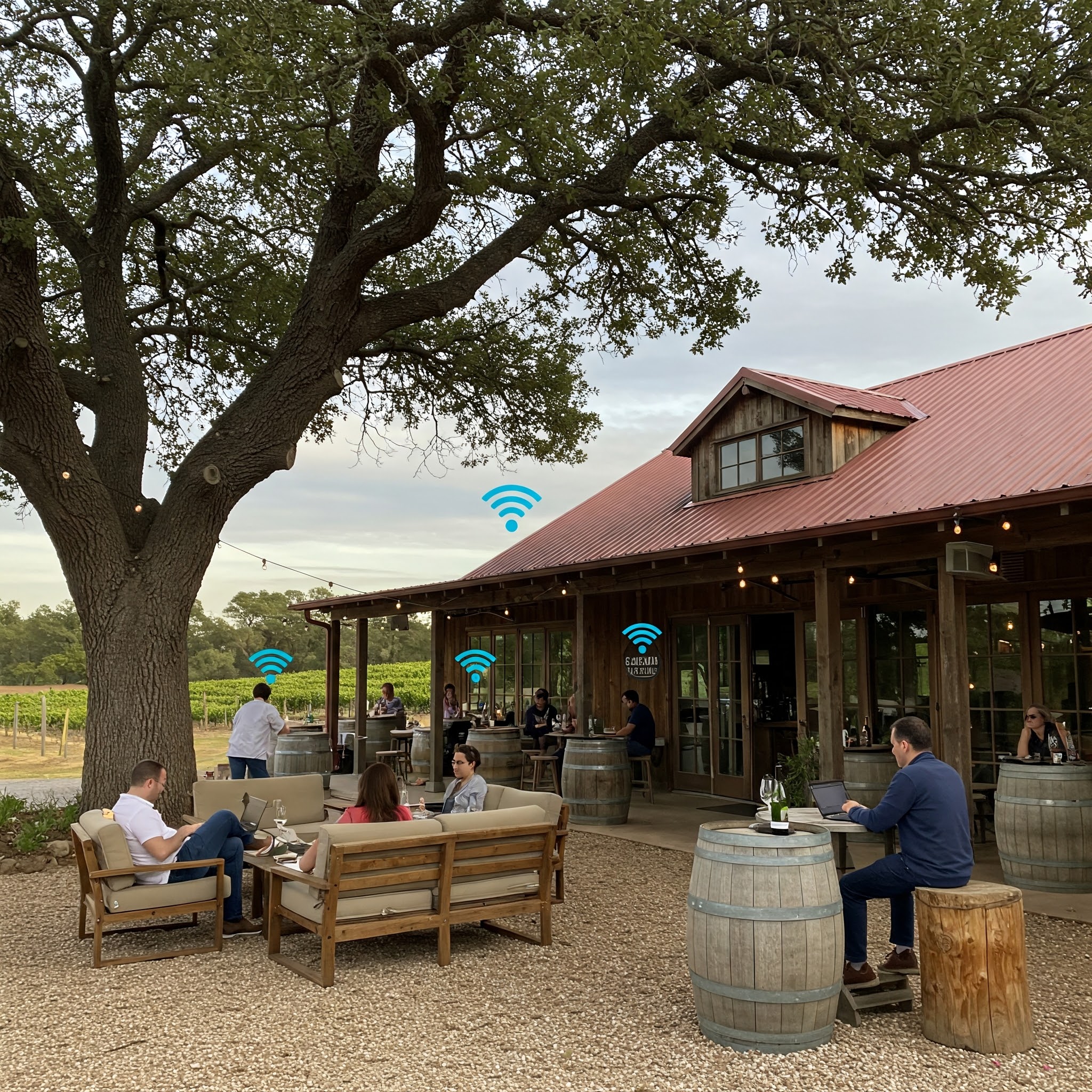
Wi-Fi at a winery is typically available for guests to use while they are visiting the establishment. It allows visitors to stay connected to the internet, check emails, browse the web, and share their experiences on social media. The wifi network is usually password-protected to ensure security and privacy for users. Guests can inquire about the wifi password at the winery's tasting room or front desk.
Brazil
Brazil, officially known as the Federative Republic of Brazil, is the largest country in both South America and Latin America. It is the fifth largest country in the world by both area and population, with over 210 million people. Brazil shares its borders with all South American countries except for Chile and Ecuador.
Portuguese is the official language, making Brazil the largest Portuguese-speaking country in the world. The country is known for its diverse culture and geography, with the Amazon Rainforest, diverse wildlife, and numerous ecosystems making it a key player in global environmental management and climate change debates.
Brazil's economy is classified as a mixed economy, and it is categorized as an emerging market and a newly industrialized country. It is one of the world's major breadbaskets, being the largest producer of coffee for the last 150 years.
The country is known for its vibrant music, dance, and festival tradition, such as samba, bossa nova, and the annual carnival. Football is the most popular sport, with the Brazil national team consistently ranking among the best in the world. The country has hosted several high-profile sporting events, such as the 2014 FIFA World Cup and the 2016 Summer Olympics.
Despite its many strengths, Brazil struggles with issues such as deforestation, inequality, poverty, crime, and political corruption. However, its cultural vibrancy and natural beauty continue to make it a popular tourist destination.
The capital of Brazil is Brasília, while its most populous city is São Paulo. Other major cities include Rio de Janeiro, Salvador, and Fortaleza. The country’s form of government consists of a democratic federative republic with both a President and a Federal Court.
Canada
Canada is the second largest country in the world by land area, located in the northern part of North America. Its southern border with the United States, stretching 8,891 kilometers, is the world's longest bi-national land border. Canada's capital is Ottawa, and its three largest metropolitan areas are Toronto, Montreal, and Vancouver.
Canada is officially bilingual at the federal level, with English and French as the main languages. The country has a population of about 38 million as of 2021, and it's known for its diversity and multiculturalism.
The country operates under a federal system, meaning its ten provinces and three territories all have their own premiers and legislatures. The country is a parliamentary democracy and a constitutional monarchy, which means the country recognizes a monarch as the official head of state, but the monarch's powers are limited by the country's constitution.
In terms of economy, Canada is one of the richest countries in the world and has a highly developed mixed economy. It's one of the few developed nations that are net exporters of energy, including oil reserves, which are third largest in the world.
Canada's climate varies widely across its vast area, ranging from arctic weather in the north, to hot summers in the southern regions, with four distinct seasons.
Canada is famous for its stunning landscapes which include rugged mountains, beautiful coastlines, and vast forests.
The country is also known for its universal healthcare system and strong commitments to education, economic freedom, and quality of life. It ranks among the highest in international measurements of government transparency, civil liberties, quality of life, economic freedom, and education.
Turkey
Turkey, officially known as the Republic of Turkey, is a transcontinental country located mainly on the Anatolian peninsula in Western Asia, with a smaller portion on the Balkans in Southeast Europe. It shares borders with eight countries: Greece and Bulgaria to the northwest; Georgia to the northeast; Armenia, Azerbaijan, and Iran to the east; and Iraq and Syria to the south. Turkey is surrounded by seas on three sides: the Aegean Sea to the west, the Black Sea to the north, and the Mediterranean Sea to the south.
Covering a total area of 783,356 square kilometres, Turkey has a population of almost 82 million people, the majority of whom are Turkish, although there are also significant minority groups including Kurds.
Ankara is the capital of Turkey, while Istanbul is the country's largest city and main cultural and commercial center. Other major cities include Izmir, Bursa, and Adana.
Turkey has a diverse cultural heritage, with influences from ancient Greek, Persian, Roman, Byzantine, and Ottoman civilizations. The country's official language is Turkish and its legal system is based on a secular constitution, although Islam is the dominant religion.
Turkey's economy is classified as an emerging market and it has a developed industrial sector, with automotive, petrochemical, and electronics industries being particularly strong. Agriculture also plays a significant role in the country's economy.
Places of interest in Turkey include the ancient city of Troy, Roman ruins in Ephesus, the rock sites of Cappadocia, the stunning beaches of the Turquoise Coast, and the bustling metropolises of Istanbul and Ankara.
Europe
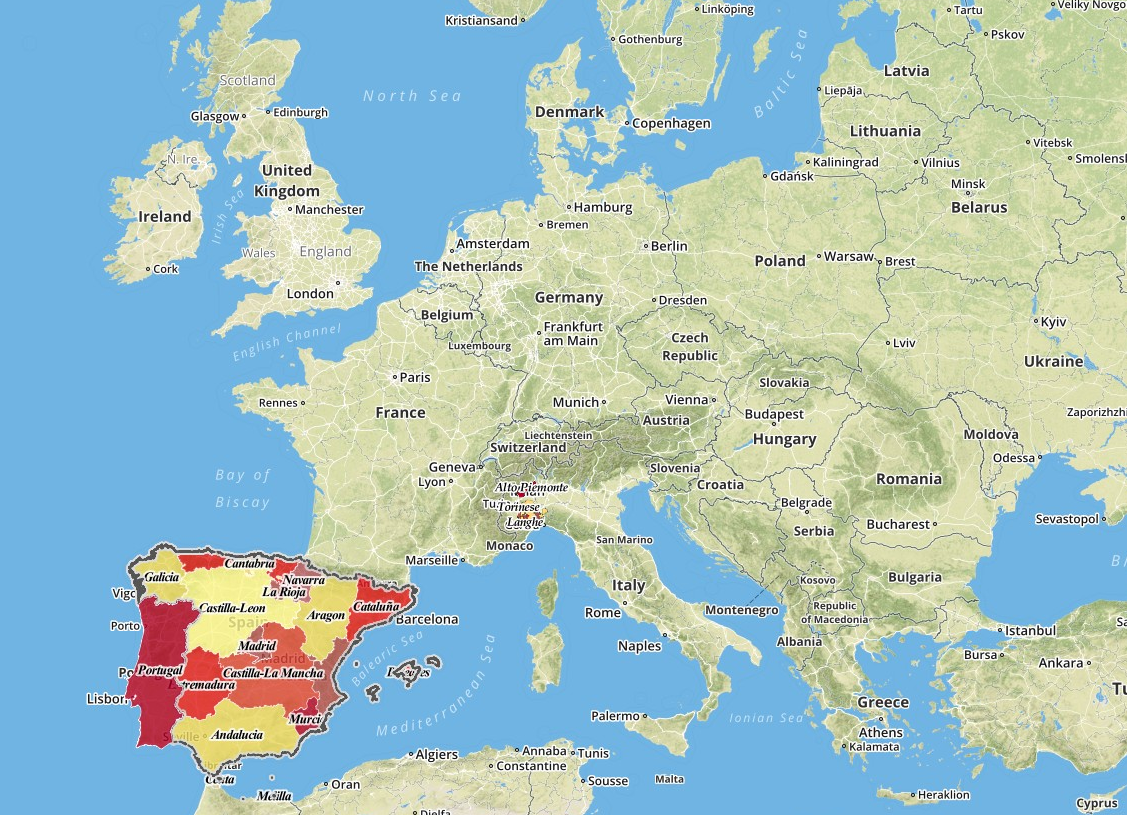
The European wine region is one of the oldest and most diverse wine-producing regions in the world. It is home to some of the most famous wine-producing countries, including France, Italy, Spain, and Germany. Each country within the region has its own unique wine-making traditions, grape varieties, and terroir that contribute to the wide variety of wines produced in Europe. The region is known for producing high-quality wines that range from light and crisp whites to full-bodied reds, as well as sparkling and dessert wines. Many of the wines produced in Europe are classified according to the region in which they are produced, such as Bordeaux, Burgundy, Tuscany, and Rioja, which are known for their specific wine styles and characteristics. Overall, the European wine region is a rich tapestry of wine culture and history that continues to influence wine production around the world.
San Francisco Bay
San Francisco Bay is a large estuary in the U.S. state of California, encompassed by a contiguous region known as the San Francisco Bay Area, dominated by large cities such as San Francisco, Oakland, and San Jose. The Bay covers somewhere between 400 and 1,600 square miles, depending on which sub-bays, estuaries, wetlands, and so on are included in the calculation.
It's one of the world's most stunning natural harbors, renowned for its depth and size, as well as its scenic magnificence. The Bay is spanned by the renowned Golden Gate Bridge and is home to Alcatraz Island, a former federal prison that is now a notable tourist attraction.
San Francisco Bay consists of several interconnected bodies of water, including San Pablo Bay and Suisun Bay, and empties into the Pacific Ocean via the Golden Gate strait. This body of water provides a crucial ecosystem, supporting a diverse range of fish, birds, and other wildlife, some of which are endangered species like the California clapper rail and the salt marsh harvest mouse.
This area has a rich history starting from indigenous communities, Spanish colonization, the Gold Rush Era, to the booming tech industry. Despite the urban development, the Bay Area maintains a significant amount of parkland and open space where residents and visitors can enjoy hiking, bird watching, and other recreational activities.
Yet, the Bay is also a hub for port activity, with the Ports of San Francisco, Oakland, and Richmond being some of the busiest on the West Coast. However, like many other natural habitats around the world, it faces environmental issues like pollution, urban encroachment, and climate change-induced sea-level rise.
San Francisco County
San Francisco County, officially the City and County of San Francisco, is located in the U.S. state of California. It is the smallest county in the state, encompassing just about 46.9 square miles, and it is also the only consolidated city-county in the state.
San Francisco is a densely populated city located on the northern end of the San Francisco Peninsula. It is bounded by the Pacific Ocean to the west and the San Francisco Bay to the east. Its famous landmarks include the Golden Gate Bridge, Alcatraz Island, Chinatown, Union Square, North Beach, the Castro district, and Mission Dolores.
As of 2019 estimates, San Francisco County had a population of approximately 883,305. The population is diverse, with a large percentage of Asian and LGBTQ+ communities. The area is known for its cultural, music, and arts scene, as well as its booming tech industry, being considered part of Silicon Valley.
The city is also recognized for its cool summers, fog, steep rolling hills, and eclectic mix of architecture. It has many parks and open spaces, like the Golden Gate Park, and several beaches along the Pacific Ocean shoreline.
San Francisco's economy is diverse, with a wide range of employment in sectors such as technology, finance, healthcare, and tourism. It is the headquarters of five major banking institutions and various other companies such as Levi Strauss & Co., Gap Inc., Salesforce.com, Dropbox, and Reddit.
Historically, the California Gold Rush of 1849 brought rapid growth, making it the largest city on the West Coast at the time; it's also well remembered for the 1906 earthquake that caused widespread destruction.